
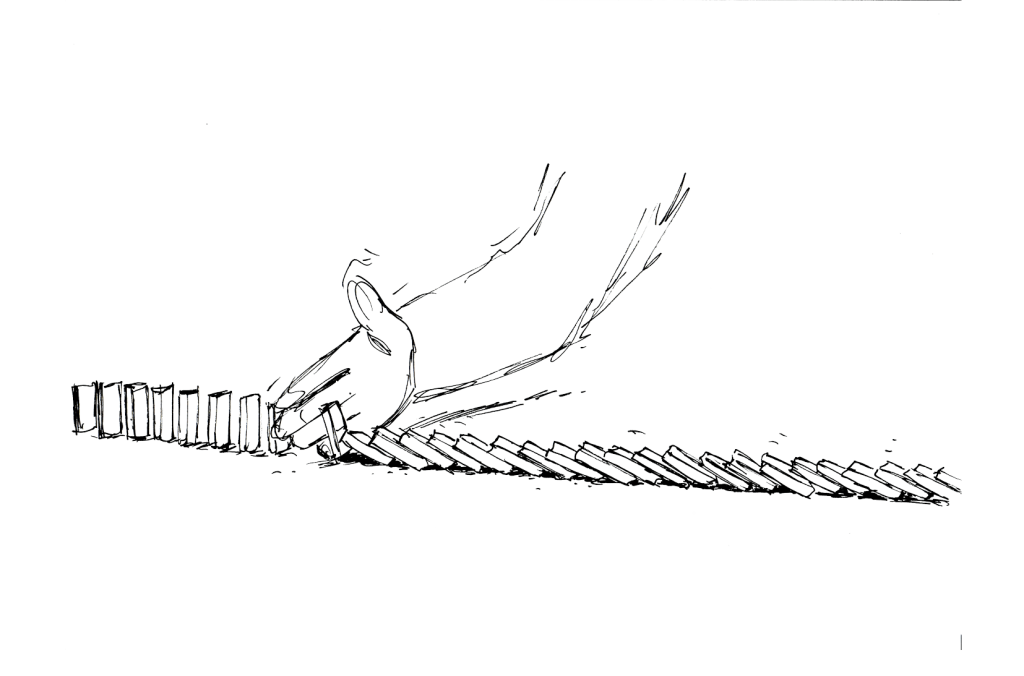
Cumulative strain – when strain builds up over time
Cumulative strain is the strain that builds up when, over an extended period, people face more demands and experiences at work than they have time to process. There is no single overwhelming incident to point to. The strain accumulates drop by drop, and often neither the employee nor the workplace notices until something small becomes the final straw.
Here, you can learn how cumulative strain develops, why it can be difficult to recognise, and what workplaces can do both before and after someone reaches their breaking point.
What Is Cumulative Strain?
Cumulative means that something builds up over time. Cumulative strain develops when work places greater demands on employees over an extended period than they have the time or capacity to recover from. Each individual day may seem manageable. It is the combined effect over months and years that takes its toll.
The strain may come from high emotional demands, abusive or offensive incidents, heavy workloads, or unclear and conflicting demands. This can affect, for example, a social worker at a refugee centre, a nurse on a cancer ward, or a prison officer.
The strain may come from high emotional demands, abusive or offensive incidents, heavy workloads, or unclear and conflicting expectations. This can affect, for example, a social worker at a refugee centre, a nurse on a cancer ward, or a prison officer.
THE FINAL STRAW
When someone eventually reacts, the trigger is often something that appears minor from the outside. In our Handbook of Psychological First Aid and Crisis Management, professionals describe what became the final straw for them:
- "When we had to introduce a new IT system."
- "When the schedule was changed for the 117th time."
- "When a patient looked at me with such kindness and said, 'You look tired.'"
- "When we received a complaint from someone we had gone out of our way to help."
- "When they announced yet another organisational change."
Several of these examples concern working conditions rather than the people being helped. A new IT system is rarely overwhelming in itself. It becomes the final straw because it adds to everything the person is already carrying.
At other times, it is simply one task too many. One professional explains: "At one point, I just couldn't transport one more terminally ill patient. It was after a journey where I had to drive a young man and his parents home from hospital so that he could die at home."
This is why it makes little sense to judge someone's reaction based solely on the final incident. If we look only at the last straw, the reaction may seem like an overreaction or a personal problem. When we consider everything that led up to it, the reaction makes sense. Many people who have experienced this say they were surprised by their own reaction. It was simply one thing too many.
WHY IS CUMULATIVE STRAIN DIFFICULT TO RECOGNISE?
Because the strain develops gradually, it can be difficult to recognise, both for the person affected and for their colleagues. Many people continue pushing themselves until their body or mind can no longer cope, resulting, for example, in sleep problems or exhaustion.
People also become accustomed to gradual changes, much like parents may not notice how much their child has grown because they see them every day. This is why workplaces cannot simply wait for employees to speak up. Colleagues and managers need to recognise the signs of psychological overload and understand that they can also affect the quiet colleague who never complains.
WHO IS PARTICULARLY AT RISK?
Anyone working in a psychologically demanding job can experience cumulative strain. However, there are three groups that workplaces should pay particular attention to:
- Experienced employees approaching retirement. They may have been exposed to many distressing incidents throughout their careers. Talk to them regularly about whether any additional support or adjustments are needed.
- Those who support others. Colleagues and managers who help others through difficult periods also need support themselves afterwards.
- Employees who are already under pressure. When someone is going through a difficult time, whether at work or in their personal life, an additional strain may be what pushes them beyond their limits.
HOW WORKPLACES CAN PREVENT CUMULATIVE STRAIN
Preventing cumulative strain depends on how work is organised. Some of the most important measures include:
- Breaks from demanding work. After a period of particularly difficult tasks, employees need opportunities to recover, for example through less demanding assignments or time off in lieu. Strain builds up when difficult experiences follow one another without sufficient opportunities for recovery.
- Attention to the overall level of strain. The examples above show that organisational restructuring, new systems, and constantly changing plans add to the emotional demands of the job. Take these factors into account when assessing how much a team can reasonably manage.
- Manageable caseloads that take into account the number of difficult cases each employee is handling.
- Support for those who provide support. Anyone who has helped a colleague through a difficult period should also have someone they can turn to.
- A shared language for strain. When it becomes normal to talk about how work affects us, it becomes easier to speak up before the strain becomes overwhelming.
Digital implementation courses for professionals in psychologically demanding work

Foundation Course in Strain Psychology
For a holistic approach to managing everyday high emotional demands and exposure to potentially traumatic events.

Foundation Course in Psychological First Aid
For collective crisis response when something unexpected happens — and the group must manage an extraordinary psychological strain together.

Foundation Course in Psychological Safety
Ensuring that tools and methods truly work in practice — rather than remaining well-written policies in contingency plans.

Foundation Course in Psychosocial Prevention
Creating a shared understanding of what proactive, collective prevention looks like in daily practice.
Q&A: Cumulative Strain
WHAT IS THE DIFFERENCE BETWEEN CUMULATIVE AND ACUTE STRAIN?
Acute strain is triggered by a single overwhelming incident, such as an accident, a threat, or a death. Cumulative strain develops gradually through repeated experiences over an extended period, without sufficient opportunities to recover in between. Both can lead to crises if they are not addressed in time.
WHAT ARE THE SIGNS OF CUMULATIVE STRAIN?
Typical signs include sleep problems, exhaustion, and other reactions that do not go away. Because these signs develop slowly, both the person affected and their colleagues often become accustomed to them. That is why it is important to recognise the signs before they become part of everyday life.
IS CUMULATIVE STRAIN THE SAME AS STRESS?
Not quite. Cumulative strain describes how strain develops: gradually and over time. It can lead to stress, but also to conditions such as burnout or secondary traumatisation, where a person is gradually affected by exposure to other people's traumatic experiences.
WHY CAN A SMALL INCIDENT TRIGGER SUCH A STRONG REACTION?
The small incident adds to everything that has already built up. The final straw is rarely significant in itself, but it pushes the person beyond their limits. That is why the reaction needs to be understood in the context of everything that came before it, rather than just the immediate trigger.
WHO IS RESPONSIBLE FOR PREVENTING CUMULATIVE STRAIN?
The organisation has overall responsibility for the psychosocial work environment. Prevention is a shared responsibility involving employees, colleagues, managers, and the organisation, but it cannot be left to individual employees alone. Whether strain accumulates depends to a large extent on how work is organised over time
We collaborate with
out of 98 municipalities
70
Danish regions
5
professionals and leaders at all levels have gained knowledge of strain psychology
100000
… as well as a wide range of public and private organisations.
Selected partners include:










A team of experts
...close to your everyday reality
When you book a consultant from the Institute for Strain Psychology, you meet an engaged and experienced specialist with deep professional knowledge and a strong commitment to practice.
Our consultants communicate complex knowledge about strain psychology with clarity, presence, and professional depth — always grounded in a holistic perspective.
Newsletter
Let’s stay connected
Sign up to receive updates on professional trends, research insights, and upcoming events.