Complex patient journeys and high emotional demands are part of everyday life in an oncology department. That is why the Oncology Department at Gødstrup Regional Hospital has chosen to work systematically with Strain Psychology and the Institute’s foundation courses.
At the Oncology Department at Gødstrup Regional Hospital, employees meet patients and relatives every day in some of life’s most difficult situations. Complex patient journeys, difficult conversations, and high emotional demands are a natural part of the working day. This places significant demands both on professional judgement and on efforts to maintain a healthy psychosocial work environment.
This was the background to the Oncology Department’s three-year collaboration with the Institute for Strain Psychology. The aim was to create a shared language for the strains that come with the work – and to give employees and leaders the knowledge and practical tools to address them together.
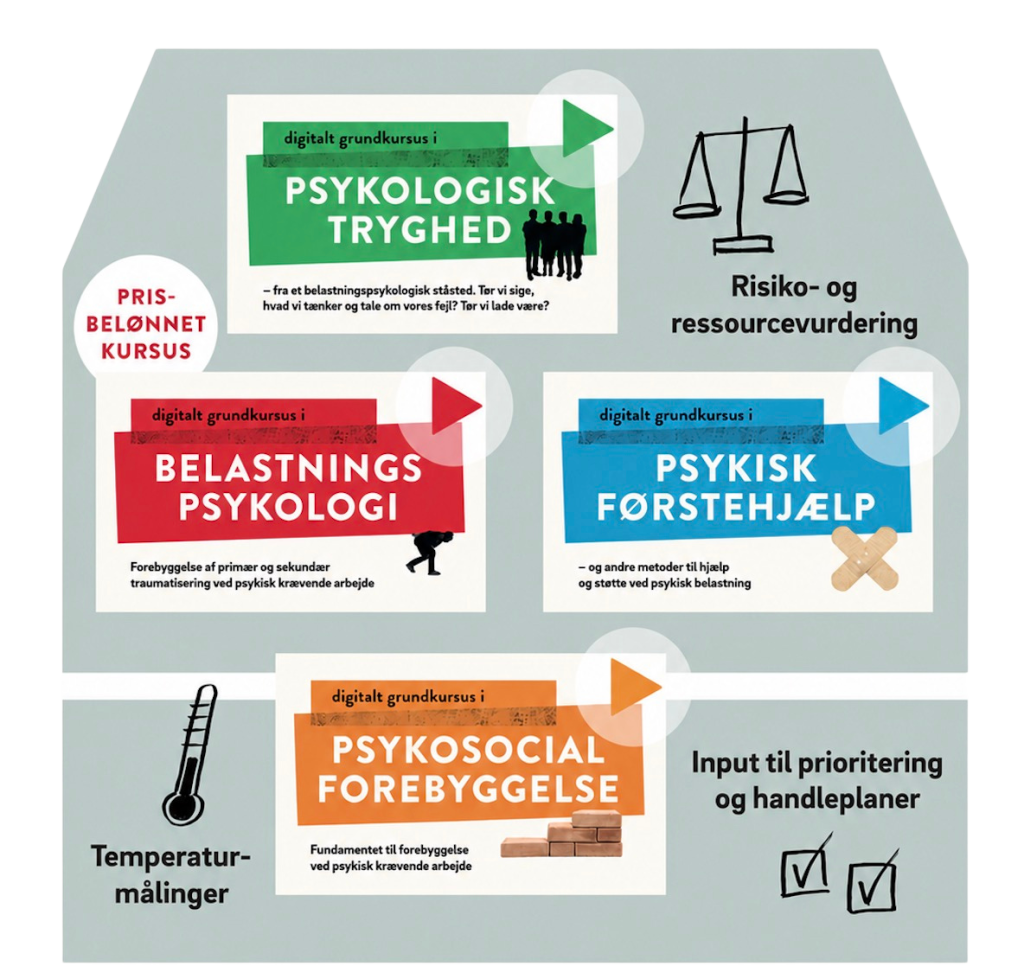
Over the course of three years, all 110 employees in the department will complete the Institute’s foundation courses in Strain Psychology, Psychological Safety, and Psychological First Aid, respectively.
A shared language across professional groups
The foundation course in Strain Psychology has already been completed and was delivered in cross-disciplinary groups. Employees from different professional backgrounds reflected together and developed valuable skills based on the Institute’s teaching films. The cross-disciplinary composition was a deliberate choice:
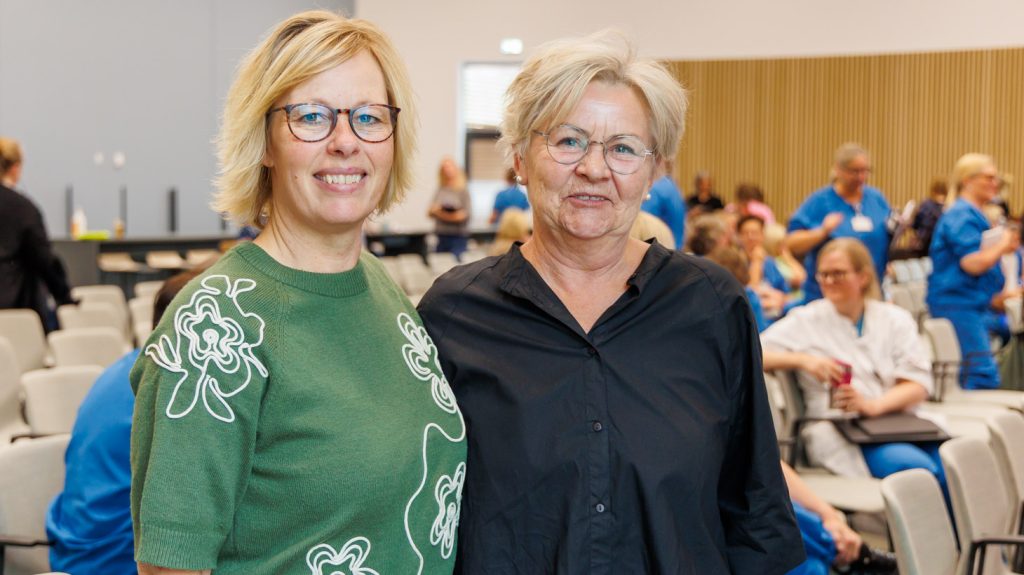
“One of the most powerful things has been bringing different professional groups together in the same room. We have had some real aha moments when we have heard how others experience everyday work. What I deal with in my role can also be recognized by a colleague in a completely different role. It gives us a greater understanding of each other and of the things that can be difficult,” says Dorthe Kondrup, secretary to the department management and coordinator of the programme.
Along the way, participants’ reflections were collected and documented. This gives the department an opportunity to revisit their experiences and actively use them in their ongoing work.
From shared knowledge to shared practice
The work with the teaching material has already made a clear impact on everyday practice. The models from the course are discussed at staff meetings, posters are displayed prominently in the department, and the leadership and wellbeing groups continuously work to connect Strain Psychology to the situations employees encounter in their everyday work.
In part of the department, they have also established what is known as a Fisherman’s Bench. Here, an employee can invite a colleague to join them when there is a need to share an experience. The point is not necessarily to find a solution, but to create space for conversation.
“We deliberately make a point of highlighting when an initiative stems from Strain Psychology. It makes it clear that this is not just a course we have attended. It is something we work with, and something that is gradually becoming part of our culture,” says Chief Nurse Rikke Louise Østergaard.
She also points out that the shared programme has given the department a new starting point for talking about the work environment:
“It makes a real difference that we have all been through the same shared programme, where everyone has gained the same knowledge and worked with the same models and tools. It makes it easier to talk about how we are doing, how we can best support one another, and which conditions are important for the psychosocial work environment. In this way, it becomes a shared responsibility,” she says.
The work now continues with the foundation courses in Psychological Safety and Psychological First Aid. Here too, the ambition is to translate the shared knowledge into concrete actions and make it an integrated part of the department’s everyday work.