FølHosp stands for emotions in hospitals. And that is exactly what the research project is about: What do you do when emotional demands are part of the work – and prevention therefore needs to be part of the workplace?
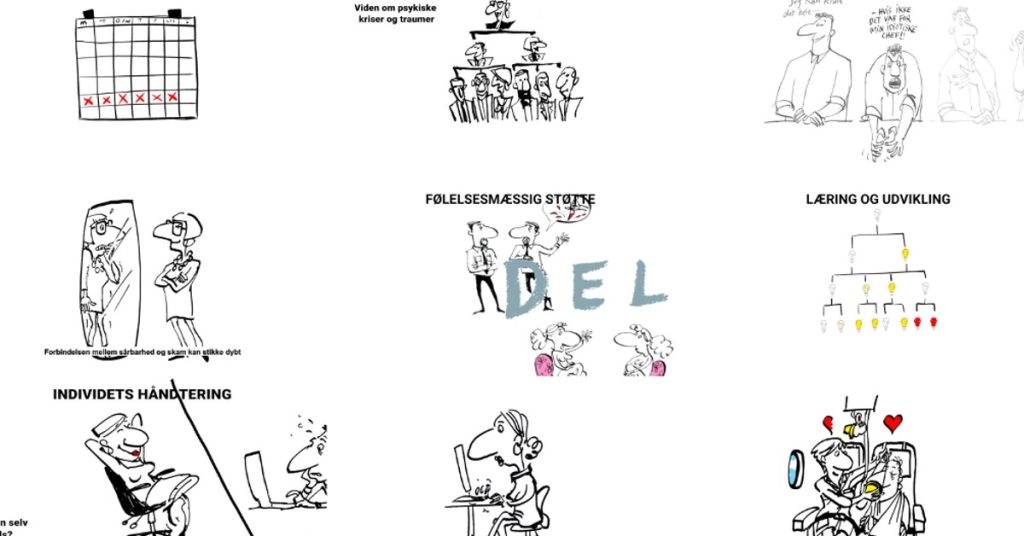
This is what the National Research Centre for the Working Environment (NFA) investigated in the FølHosp research project, in which a comprehensive organizational intervention was carried out at a hospital. How can workplaces prevent and manage high emotional demands at work? The Institute for Strain Psychology was responsible for the intervention. All employees at the hospital completed the Foundation Course in Strain Psychology, combined with a range of practice-oriented interventions at several levels of the organization – from employees and work communities to TRIOs and management.
From shared language to shared action
The process evaluation of FølHosp showed that the intervention was implemented to a high degree and that a number of positive changes took place in preventive practice. Employees gained greater knowledge about emotional demands. At the same time, they experienced better social support and greater opportunities for action, and the evaluation showed improvements in preventive practice.
Another important finding was that employees developed a shared language for the emotional strains associated with their work. The TRIO groups strengthened their collaboration and initiated concrete preventive measures in the departments. FølHosp therefore suggests that an organizational intervention can help shift work with high emotional demands from knowledge held by individuals to shared action and prevention within the work community.
Prevention needs to work in the real world
FølHosp also provides important insight into the conditions under which a preventive intervention needs to operate. Management support and a clear connection between the intervention and the organization’s core task proved important for implementation. At the same time, the hospital was affected by factors including overcrowding, high employee turnover, and time pressure. Despite these challenging conditions, a high degree of implementation was achieved. The researchers found no clear overall effect on sickness absence, employee turnover, or health-related costs.
This is an important part of the findings. The researchers conclude that this type of intervention can contribute to improved preventive practice, while the full effects are likely to require the intervention to be accompanied by broader organizational and structural measures. In other words, Strain Psychology-based prevention can strengthen a workplace’s shared language, support, and opportunities for action. At the same time, organizational factors that create or intensify strain need to be addressed.
Taking the lessons from FølHosp forward
The experience from FølHosp has subsequently been translated into a practical tool for workplaces that want to work systematically with the prevention and management of high emotional demands. The guide was developed by NFA in collaboration with Rikke Sørensen from the Institute for Strain Psychology and is based on the researchers’ process evaluation, the experience gained from implementing the intervention, and existing research on the implementation of organizational interventions.
The guide points to five key factors:
1. Top management prioritization
2. A coordinator with time and mandate
3. Systematic health and safety efforts
4. Strong collaboration within the health and safety group
5. Embedding preventive measures into existing workflows and structures