In Psychiatry at Gødstrup Regional Hospital, Strain Psychology has become a natural part of everyday work. With a shared language, shared knowledge, and shared methods, employees and management work together to understand, prevent, and manage the strains that naturally come with the job.
Every day, employees in Psychiatry at Gødstrup Regional Hospital hold two short check-in meetings. At the first meeting in the morning, they review the day’s tasks. Are they still distributed appropriately? Does anyone have more on their plate than they can manage? And is there a colleague who has some capacity and can help?
At the end of the day, they meet again, but this time the focus is different. Has anyone been through a particularly demanding situation? Is there a need for feedback, support, or emotional support before the working day ends?
Because even though employees can always ask for help, it is not necessarily easy to raise your hand in the middle of a busy working day. The check-in meeting therefore creates a dedicated space where employees can identify together if someone needs support or relief.
The check-in meetings are one of the initiatives that have grown out of Psychiatry’s work with Strain Psychology.
A shared language for psychological strain
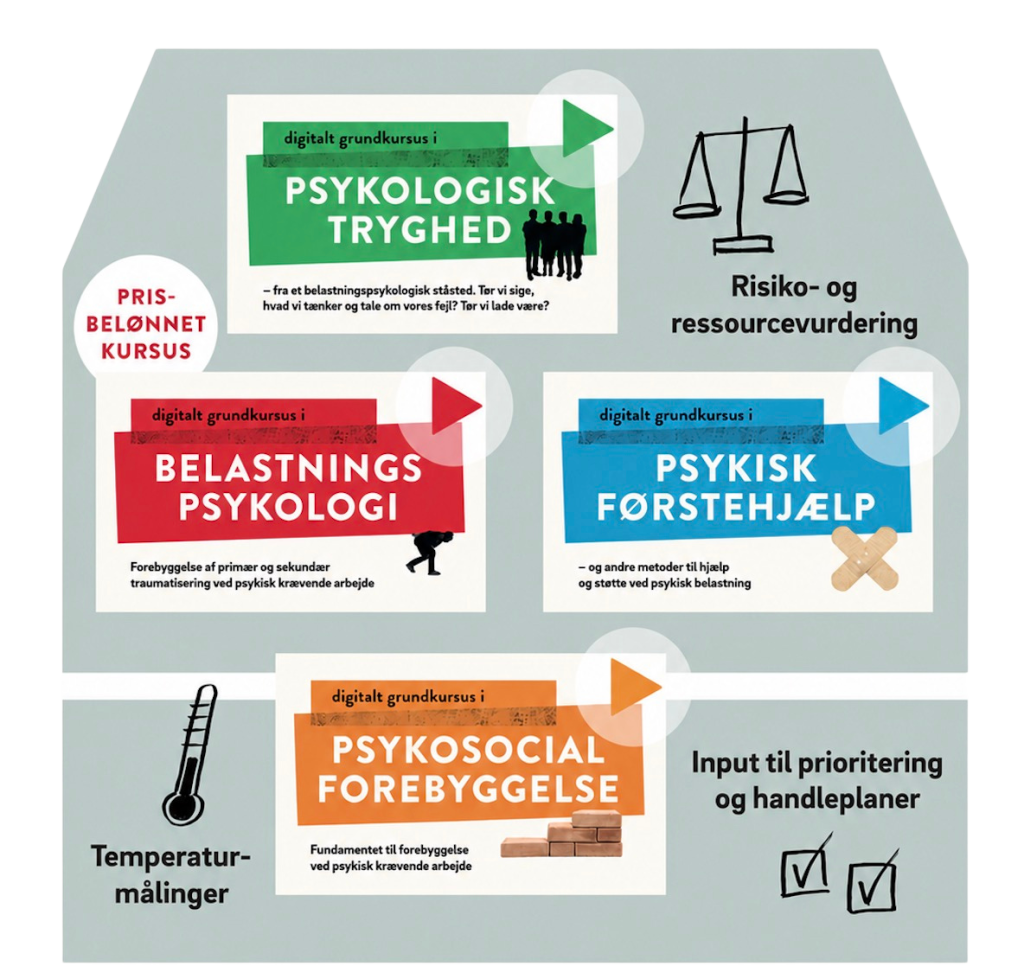
All employees in Psychiatry have worked with the Institute for Strain Psychology’s Foundation Course in Strain Psychology. The training has, among other things, been delivered through joint theme days, where employees have worked with the same themes and models.
The foundation course has helped give employees and management a shared language and a common starting point for understanding and managing the strains that come with the work.
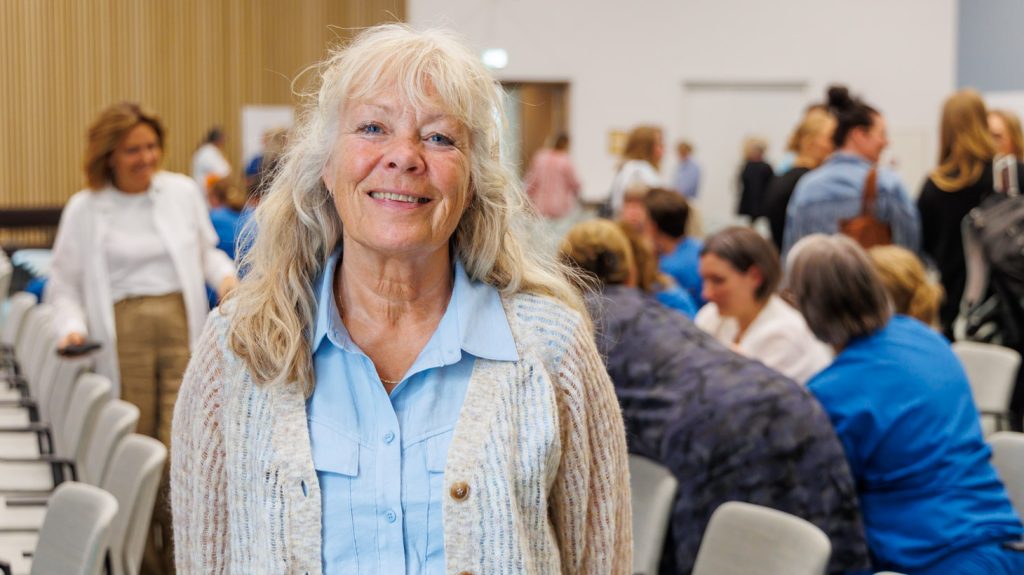
For Irene Amby, a development nurse in Psychiatry at Gødstrup Regional Hospital, one of the biggest changes is that employees have become more aware of both themselves and one another.
“We have become more aware of one another. We have also become more aware that we need to look after ourselves before we can do something good for others,” she says.
The models are put into practice – even when everyday work changes
The check-in meetings are just one example of a preventive initiative that has been implemented as part of the Foundation Course in Strain Psychology in the department.
When Psychiatry was in the midst of a major change process, employees used the Institute’s VIK model of control, influence, and conditions. At a development day, employees each wrote on Post-it notes what they felt they had control over, what they could influence, and what had to be accepted as a given.
The responses were brought together to create a shared picture of the challenges that mattered most. This gave the department a basis for prioritizing which areas to work on next.
“In a large department, it can be difficult to know whether what you hear about most is also what is affecting people the most. Here, we were able to bring together employees’ different experiences and see how many of them were pointing to the same thing,” says Irene Amby.
The work environment has become something we create together
According to Irene Amby, one of the strengths of Strain Psychology is that the models can be used again and again. Reality is constantly changing, so it makes sense to keep bringing the tools back out and applying them in new contexts.
This also applies to the check-in meetings, which have evolved along the way. In the beginning, employees had to be reminded to attend. Today, they show up on their own:
“People come because it makes sense. They have experienced that they can help others and that they can also get some relief themselves. At the same time, it strengthens the sense of community and the feeling that we are a team that supports one another,” says Irene Amby.